Career progression
Singapore tells a different story to the rest of the region here. Its overall advancement rate runs below the regional average, yet when a Singapore designer does advance, pay follows more often: 69.7% received a raise alongside it, against 53.8% regionally. Progress and reward move together more tightly in Singapore than they do elsewhere in Southeast Asia.
Chart proof
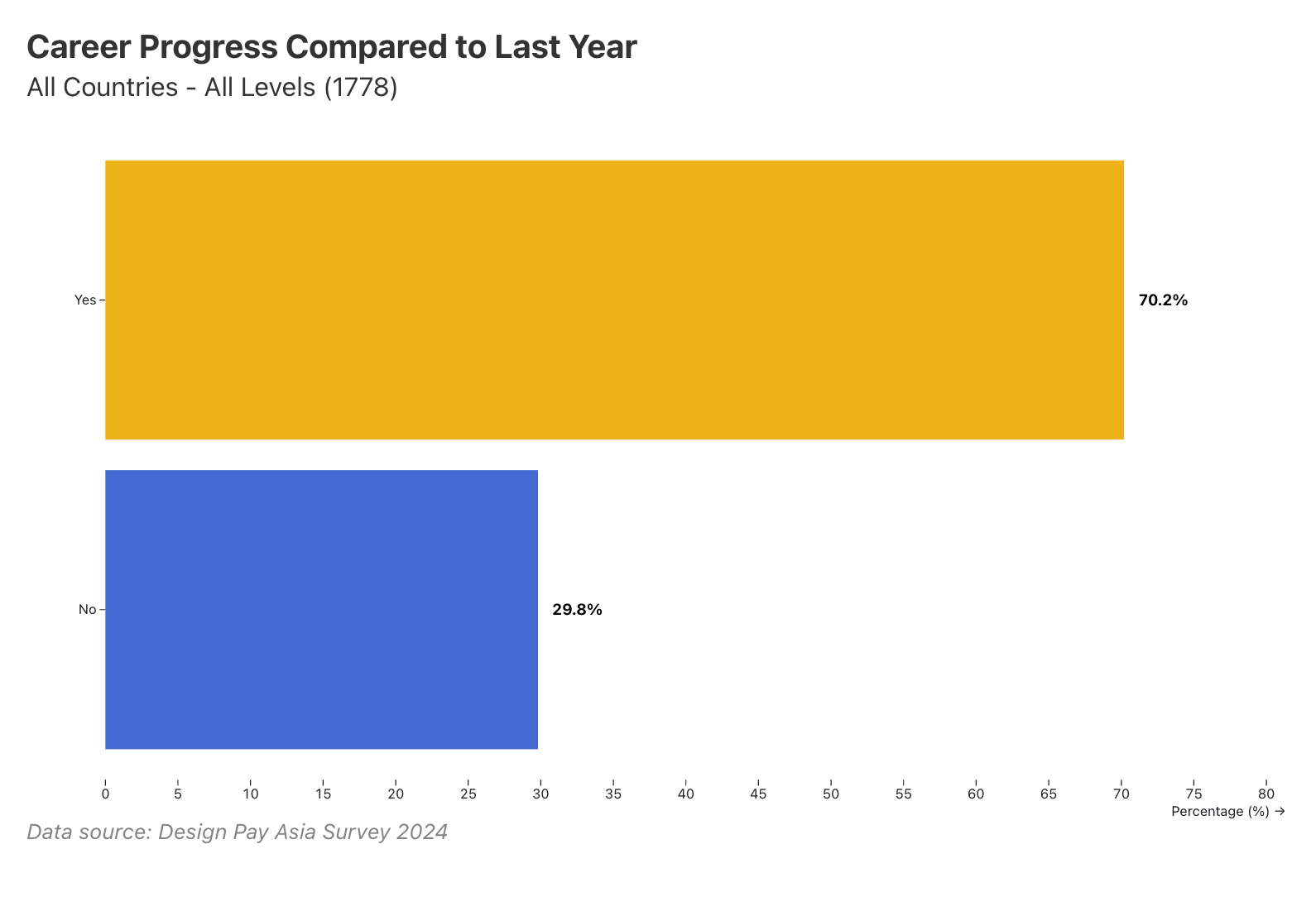
Career progress compared to last year
Year-on-year career advancement across Southeast Asian designers.
Seven in ten designers (70.3%) reported career advancement in the past year.
View data table
| Outcome | Respondents (n) | Proportion |
|---|---|---|
| Advanced career | 1,248 | 70.3% |
| No advancement | 530 | 29.7% |
Careers are moving. Pay is not keeping up.
Chart proof
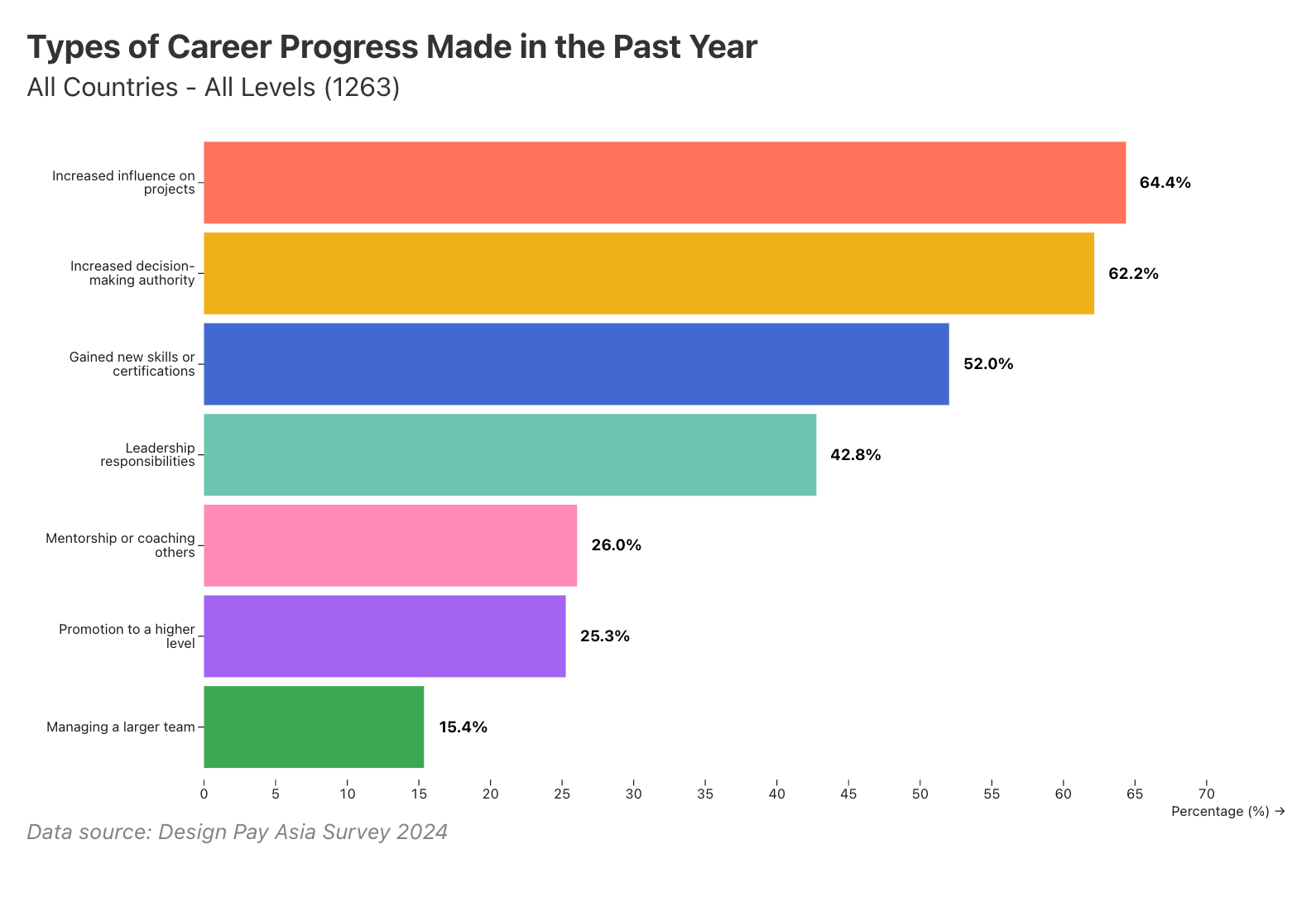
Types of career progress made in the past year
Breakdown of advancement types among designers who reported career progress.
Increased project impact (64.3%) was the most common form of advancement, outpacing formal promotions (25.3%).
View data table
| Type | Respondents (n) | Percentage |
|---|---|---|
| Increased project impact | 813 | 64.3% |
| Promotions | 319 | 25.3% |
Chart proof
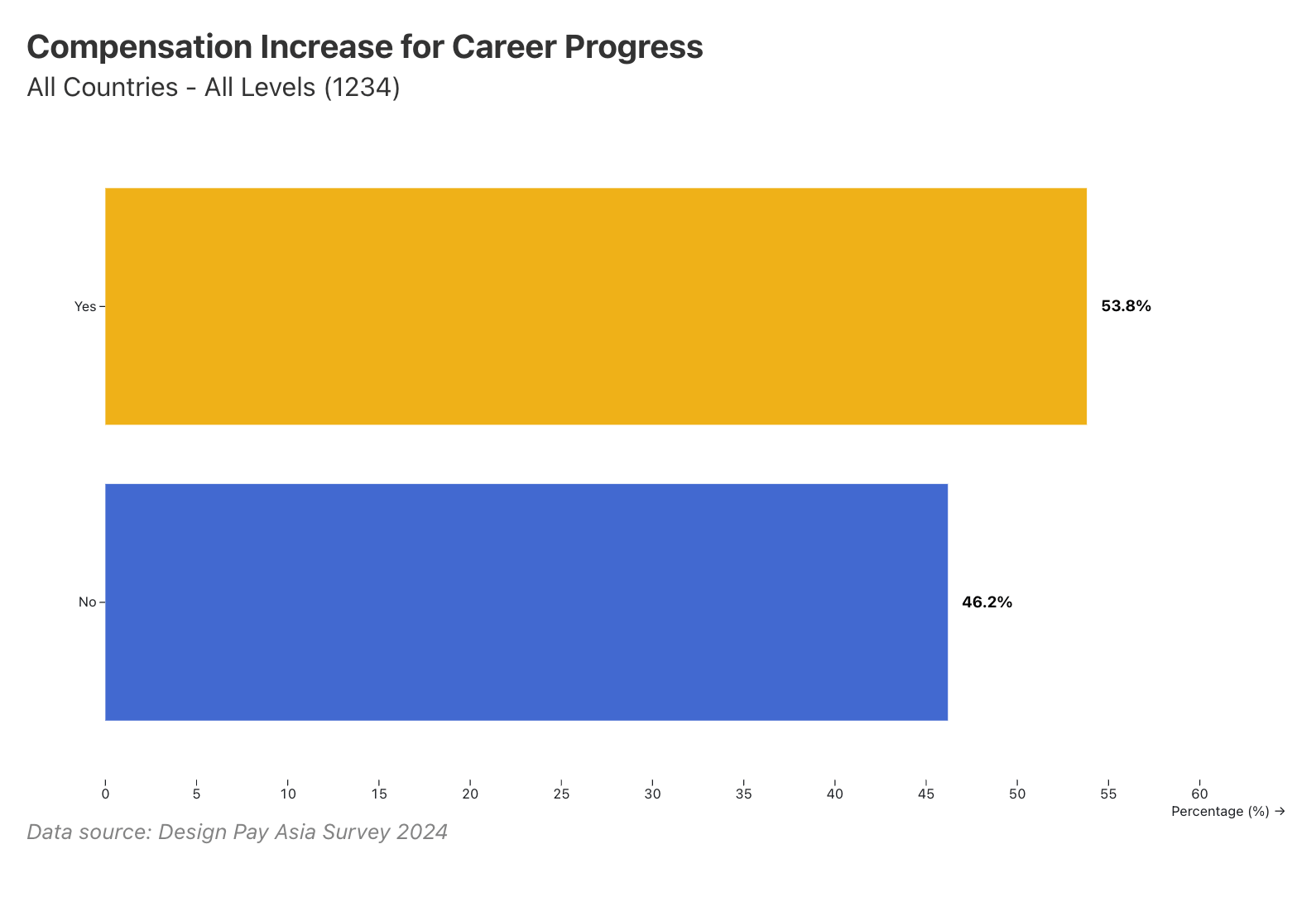
Compensation increase for career progress
Pay recognition for career advancement among designers who progressed in the past year.
46.2% of designers received no pay increase despite reporting career advancement.
View data table
| Outcome | Respondents (n) | Proportion |
|---|---|---|
| No pay increase | 570 | 46.2% |
| Received pay increase | 664 | 53.8% |
Chart proof
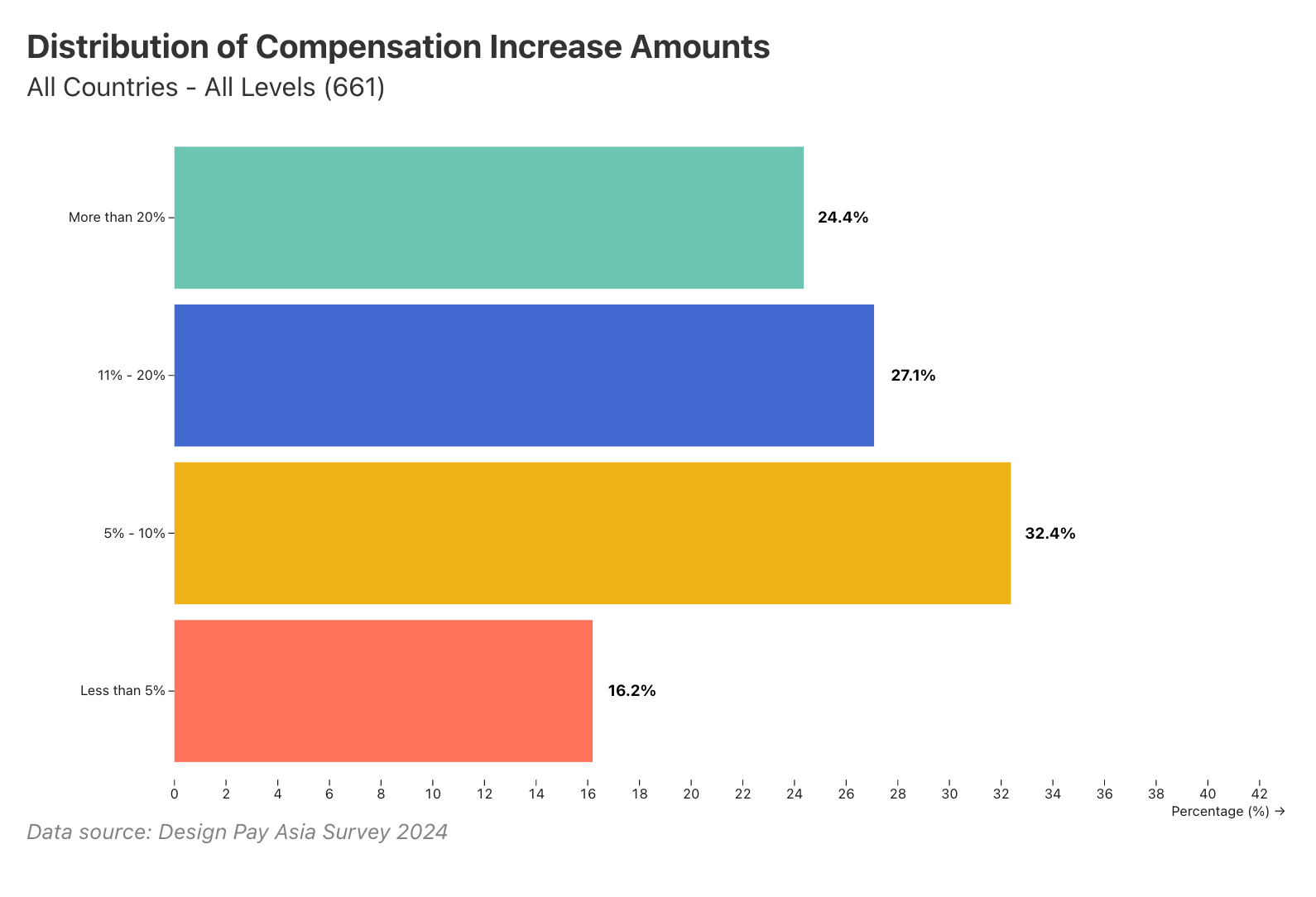
Distribution of compensation increase amount
Size of pay increases among designers who received a raise.
Of those receiving increases, 83.8% saw gains above 5%, and 24.3% secured over 20%.
View data table
| Increase band | Respondents (n) | Proportion |
|---|---|---|
| Above 5% | 554 | 83.8% |
| Above 20% | 161 | 24.3% |
Chart proof
I am satisfied with my current career progression
Career satisfaction rating distribution across all designers surveyed.
Just under half rate their career progression in the middle of the scale (4–5), 48.2%. High satisfaction (6–7) reaches 19.2%, and 32.6% sit in the bottom three ratings.
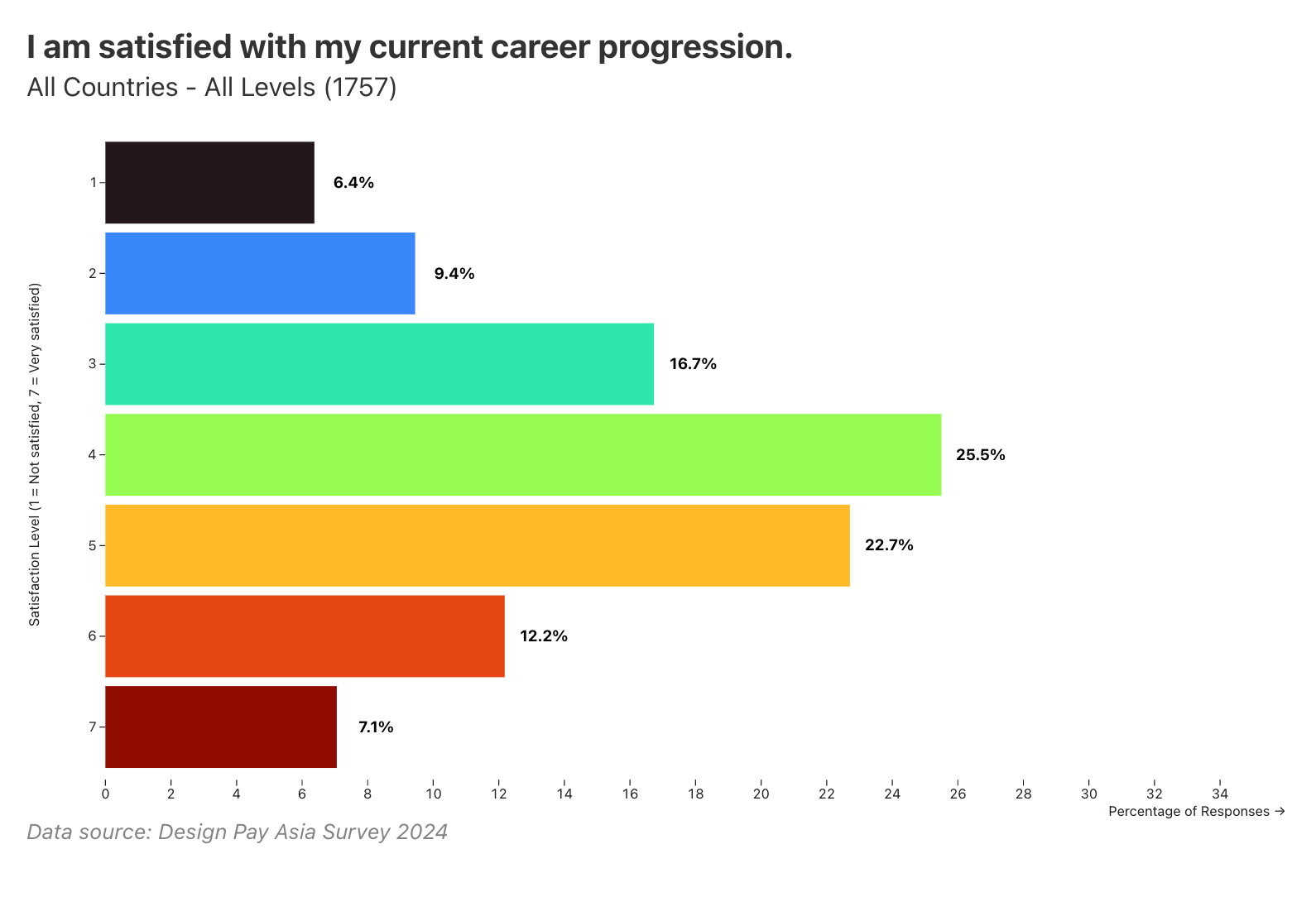
View data table
| Rating range | Respondents (n) | Proportion |
|---|---|---|
| High satisfaction (6–7) | 338 | 19.2% |
| Moderate (4–5) | 847 | 48.2% |
| Low satisfaction (1–3) | 572 | 32.6% |
That gap between advancing and being paid for it is not evenly spread. Designers report far easier access to expanded scope than to the formal recognition that would normally follow it: a new title, a corresponding raise.
What this means for you
If you're a designer
- Look for ways to show your growth beyond just promotions and decide if that is worth pursuing.
- Consider different paths for growth, even if they are not official at your company.
If you're leading a team or organisation
- Think about how to measure and show the value of design work to justify investing in people's growth.
- Consider how to support both traditional and new types of design careers.
- Check if your career development plans match what your organisation needs.
- Weigh the costs and benefits of creating formal career paths.
Evidence and further reading
Evidence used in this section
-
70.3% report career advancement but 46.2% saw no pay increase
70.3% of designers report career advancement in the past year, with soft skills leading growth: 64.3% increased project influence. However, 46.2% saw no pay increase despite career progress. Career satisfaction clusters in the middle of the scale: 48.2% rate it 4-5, against 19.2% high (6-7) and 32.6% low (1-3).
-
2024 no-pay-increase signal
Share of respondents across six markets who reported receiving no pay increase in 2024.
-
2024 Singapore salary increase signal
Share of Singapore respondents who reported a salary increase in 2024.
Further reading and context
- Southeast Asian designers report 16.5% pay gap between responsibility and compensation
- Singapore's design workforce expected to grow 25% by 2025
- McKinsey: Companies with strong design practices outperform by 2x in revenue
- DesignSingapore Council: 26% of companies believe design plays critical role in strategy
Questions worth exploring
How can we measure the impact of design consistently across different companies?
Worth exploring next
- What makes a good career framework for different company sizes?
- How will new specialist roles change established career paths?
- Are companies ready for senior individual contributor roles beyond lead and staff like in tech companies?
Where this sits in the conversation
-
Overview
2024 report -
Landscape
Demographics -
Landscape
Roles & experiences -
Landscape
Compensation -
Landscape
Company landscape -
Sentiments
Offer & negotiation -
Sentiments
Career progression you are here -
Sentiments
Value of design -
Sentiments
Job market -
Singapore deep dive
Singapore deep dive -
Close
The conversation continues
Commentary
Looking at how designers are growing their careers, the picture is mixed.